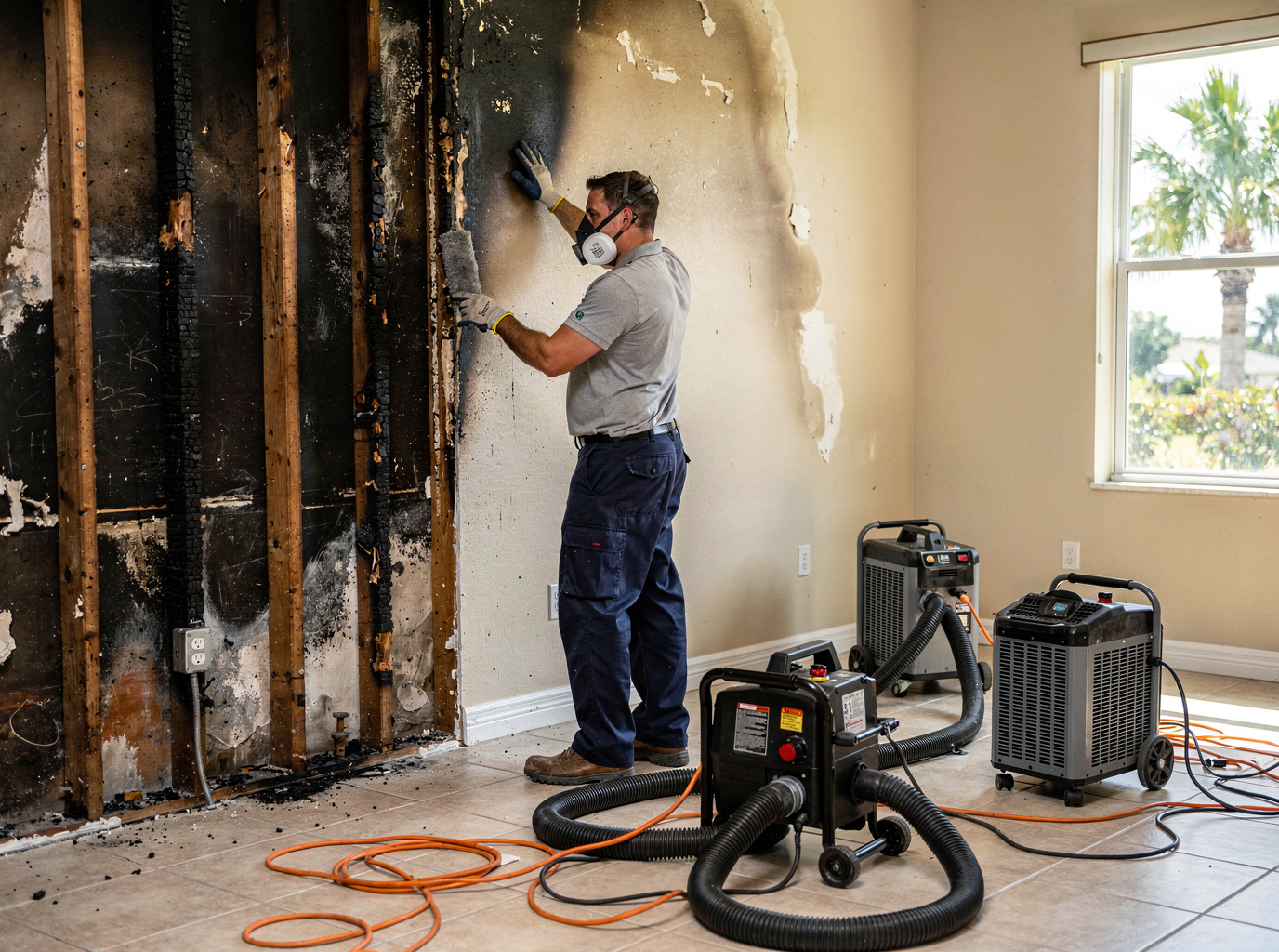
Cape Coral homes built before the 1990s often use concrete block with wood truss roofs. When fire reaches the attic, heat travels along the trusses and leaves heavy soot on every surface while suppression water pools in the block cells. Restoration crews must pull baseboards and drill weep holes to release trapped moisture before the tropical humidity turns it into mold within days.
Lee County requires permits for any structural repair exceeding $5,000. Crews document every charred joist and electrical chase before drywall is removed so the rebuild meets current wind-load standards. In neighborhoods like Burnt Store, where many homes sit on septic systems, crews also check for burned drain lines that can contaminate the yard after the first heavy rain.
Smoke odor lingers in HVAC ductwork and cabinet interiors long after visible soot is gone. Techs run negative-air machines with activated charcoal and fog thermal foggers through every register, then seal porous materials that cannot be cleaned. This step is critical in Cape Coral’s dry winters when closed-up homes trap residual odors for months.
Contents cleaning happens on-site when possible. Electronics, artwork and textiles from Cape Coral Isles homes are inventoried, cleaned in an isolated containment zone, and returned the same day to reduce storage costs and homeowner displacement.
Technician insight
In Cape Coral the thing that catches most people out with fire damage is how fast suppression water inside concrete block walls turns into mold once the humidity spikes. We see it every summer in Cape Coral Isles and Downtown homes when owners wait two days to call; the odor returns and the job doubles.
Burnt Store Attic Fire
A lightning strike hit a 1980s home in Burnt Store. Fire traveled along roof trusses and water from firefighters pooled in the block walls. We mapped the moisture, released trapped water through weep holes, removed soot from every surface, and ran drying equipment for four days. The home passed clearance testing and avoided secondary mold growth before the owners returned.
Fire Damage Restoration Services We Offer
✓Soot and Ash Removal
HEPA vacuuming and chemical sponging of all surfaces to stop acidic soot from etching paint, tile and metal fixtures.
✓Smoke Odor Neutralization
Thermal fogging and hydroxyl treatment to break down smoke molecules trapped in drywall, insulation and ductwork.
✓Fire-Damaged Drywall Replacement
Cut-out and disposal of charred or water-saturated drywall followed by new installation that meets Lee County wind codes.
✓Post-Fire Structural Drying
Industrial dehumidifiers and air movers placed to pull suppression water from concrete block walls and subfloors before mold forms.
✓Contents Pack-Out and Cleaning
Inventory, cleaning and storage of salvageable household items so homeowners can stay in temporary housing without losing belongings.
✓HVAC Soot Removal
Duct cleaning and coil treatment to prevent smoke residue from recirculating through the home after power is restored.
Fire Damage Restoration Cost in Cape Coral, FL
| Service | Typical Range | What Affects It |
|---|---|---|
| Emergency Board-Up | $350–$850 | Size of openings and number of stories |
| Soot Removal Per Room | $400–$900 | Heavy vs light soot load and surface type |
| Full Home Odor Treatment | $1,200–$2,800 | HVAC involvement and square footage |
| Structural Drying After Fire | $800–$2,500 | Amount of suppression water and block wall saturation |
| Contents Pack-Out And Clean | $1,500–$4,000 | Volume of items and cleaning method required |
Ranges are typical for Cape Coral, FL and confirmed with an exact written quote before any work starts.
How it works
- 1
Emergency Board-Up And Safety
Secure the structure, shut off utilities and prevent weather intrusion while crews assess visible and hidden damage.
- 2
Moisture Mapping And Soot Testing
Use thermal cameras and moisture meters to locate water inside block walls and test soot pH to choose the right cleaning agents.
- 3
Contents Removal And Surface Cleaning
Pack out salvageable items, remove loose soot, then treat remaining surfaces with odor counteractants.
- 4
Drying And Clearance Testing
Run drying equipment until moisture levels meet industry standards, then perform air quality checks before rebuild begins.
- 5
Rebuild Coordination
Work with licensed contractors to replace damaged framing and finishes while keeping the job on schedule for insurance documentation.
Pricing
Upfront written quotes after inspection; open 24/7 for emergency board-up and assessment.